How Do Personal Injury Lawyers Get Paid? Contingency Fees Explained
One of the first questions people ask after an accident is also one of the most practical:
How much will a lawyer cost me?
For most personal injury cases, the answer starts with a structure called a contingency fee. Understanding how it works, before you sign anything, removes most of the mystery from hiring a lawyer.
What Is a Contingency Fee?
A contingency fee means the attorney's fee is contingent on the outcome of your case.
Instead of paying by the hour or paying a large retainer up front, you agree that the attorney receives a percentage of the money recovered for you. If there is no recovery, you generally do not owe an attorney's fee.
That structure exists for a reason. Injured people are usually facing medical bills and missed work at the exact moment they would need to pay a lawyer. The contingency fee aligns the lawyer's interest with yours: the lawyer only gets paid when you do, and the fee grows only when your recovery grows.
What Percentage Do Personal Injury Attorneys Take?
The percentage is set by the written fee agreement you sign at the start of the case.
Across the industry, contingency percentages commonly fall around one third of the recovery for a case that settles before a lawsuit is filed, and a higher percentage, often 40%, if the case proceeds into litigation or trial. Those figures vary by firm and by case, and complex cases can be structured differently.
What matters is that the exact percentage, and any point at which it changes, is spelled out in writing before the firm begins work. Nevada's Rules of Professional Conduct require contingency fee agreements to be in writing, signed by the client, and to state how the fee is calculated.
Questions worth asking any firm, including this one:
- What is the percentage if the case settles before suit?
- Does the percentage change if a lawsuit is filed or the case goes to trial?
- Is the percentage calculated before or after case costs are deducted?
- What happens if I decide to end the case early?
What Is the Difference Between Fees and Case Costs?
Attorney's fees and case costs are two different things, and confusing them leads to most of the surprise people feel at the end of a case.
Fees are what the firm earns for its work, calculated as the contingency percentage.
Costs are the expenses of building the case, such as:
- court filing fees
- medical record and billing record requests
- police reports
- expert witness fees
- deposition and court reporter costs
- mediation fees
- investigation expenses
In many contingency arrangements, the firm advances these costs while the case is pending and is reimbursed from the settlement at the end. Your agreement should say who is responsible for costs, and whether you owe them if the case does not succeed. Ask, and get the answer in writing.
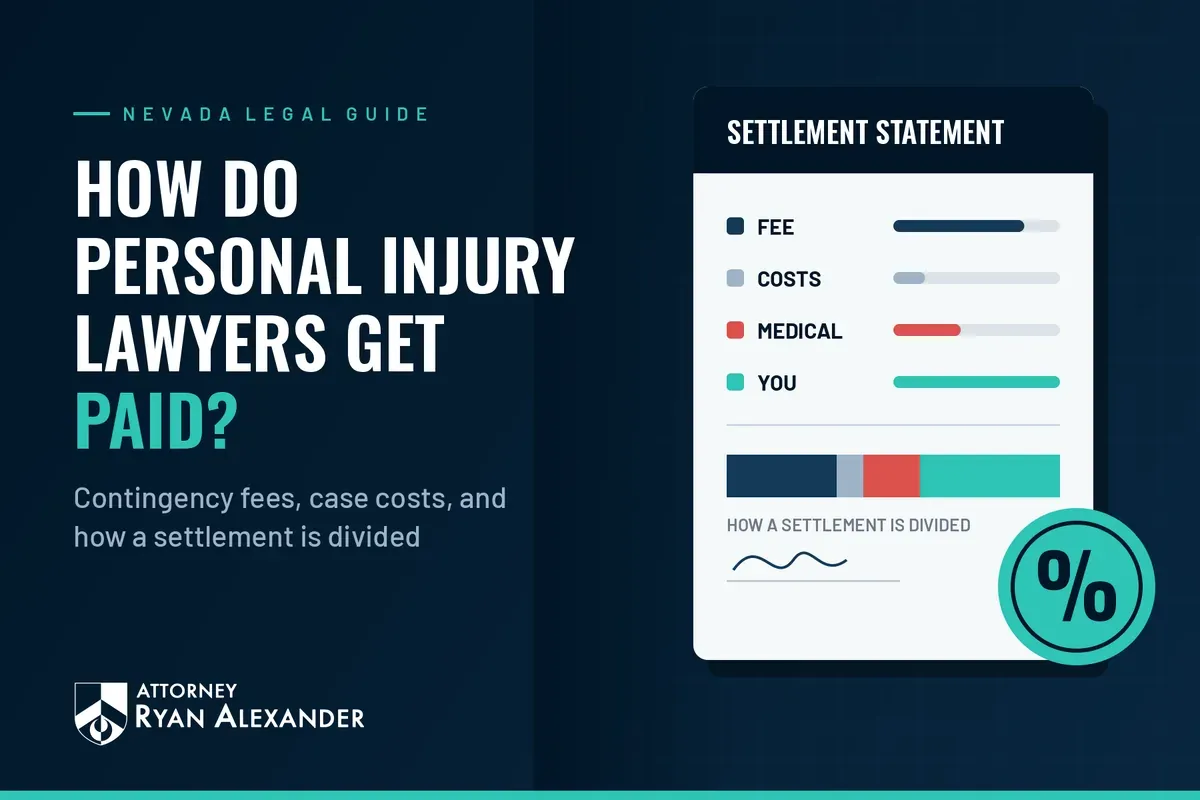
How a Settlement Is Divided
When a case resolves, the settlement funds are generally distributed in an order like this:
- The contingency fee is calculated according to your agreement.
- Case costs advanced by the firm are reimbursed.
- Outstanding medical bills and medical liens are paid or resolved.
- The remaining balance is paid to you.
Your attorney should provide a written settlement statement showing each of these amounts before you approve the distribution. If anything on the statement is unclear, ask before signing. This is your money, and every line should be explainable.
Related: How Much Is My Car Accident Case Worth in Nevada?
Do I Pay Anything Up Front?
In a standard contingency arrangement, no. There is no retainer and no hourly billing while the case is pending.
That includes the initial evaluation. A free case evaluation means you can have an attorney review what happened, explain whether you may have a claim, and outline the fee agreement before you owe anything at all.
Related: How to Choose a Personal Injury Lawyer in Las Vegas: 5 Questions to Ask Before You Hire
Why Not Just Handle the Claim Myself and Keep the Percentage?
Sometimes that is a reasonable choice, particularly for a very small property-damage claim with no injury.
For injury claims, the comparison is not really "percentage versus nothing." Insurance companies evaluate represented and unrepresented claimants differently, they know which claimants can file suit and try a case, and they price settlement offers accordingly. An experienced attorney's job is to increase the total recovery by more than the fee, by building the evidence, identifying every available insurance policy, resolving liens, and negotiating from a position the insurer takes seriously.
The evaluation is free, so you can make that comparison with real numbers in front of you rather than guessing.
Questions About Fees? Ask Before You Sign
A fee agreement should never be a mystery document. At Ryan Alexander, Chtd., the fee structure is explained in writing before work begins, and the team can walk through exactly how fees and costs would apply to your case.
Free Case Evaluation (702) 333-8888
This article provides general information and does not constitute legal advice. Every accident is different, and different claims may involve different deadlines, insurance policies, and legal issues.