What Happens During a Free Case Evaluation?
Most people have never sat down with a lawyer before their accident, so the free case evaluation sounds more formal, and more committal, than it is. It is a working conversation with a narrow purpose: the attorney learns what happened, tells you honestly whether you have a claim worth pursuing, and explains what it would involve. You learn the same things, plus whether this is the firm you want.
It costs nothing, it creates no obligation, and it is confidential. Here is how it actually goes.
Before the Meeting: What to Bring
Bring what you have. Nothing on this list is required, and a missing item is a reason to start, not to wait:
- the police or incident report, if you have it
- photos or video of the scene, vehicles, and injuries
- the other driver's information and any insurance letters you have received
- your own auto and health insurance details
- medical records, bills, or discharge papers so far
- pay stubs or anything showing missed work
- any recorded-statement requests or settlement offers from the insurer
If the crash just happened and you have almost none of this, come anyway. Gathering it is part of the firm's job.
During the Meeting: Your Story First
The first part is yours. You describe the accident and your injuries in your own words, and the attorney listens for the facts the claim will turn on: how it happened, who saw it, what treatment you have had, and what the insurance companies have done so far.
Expect direct questions about the hard parts too, including any fault of your own, prior injuries, and gaps in treatment. Honest answers at this stage are not a problem; surprises later are.
What the Attorney Is Evaluating
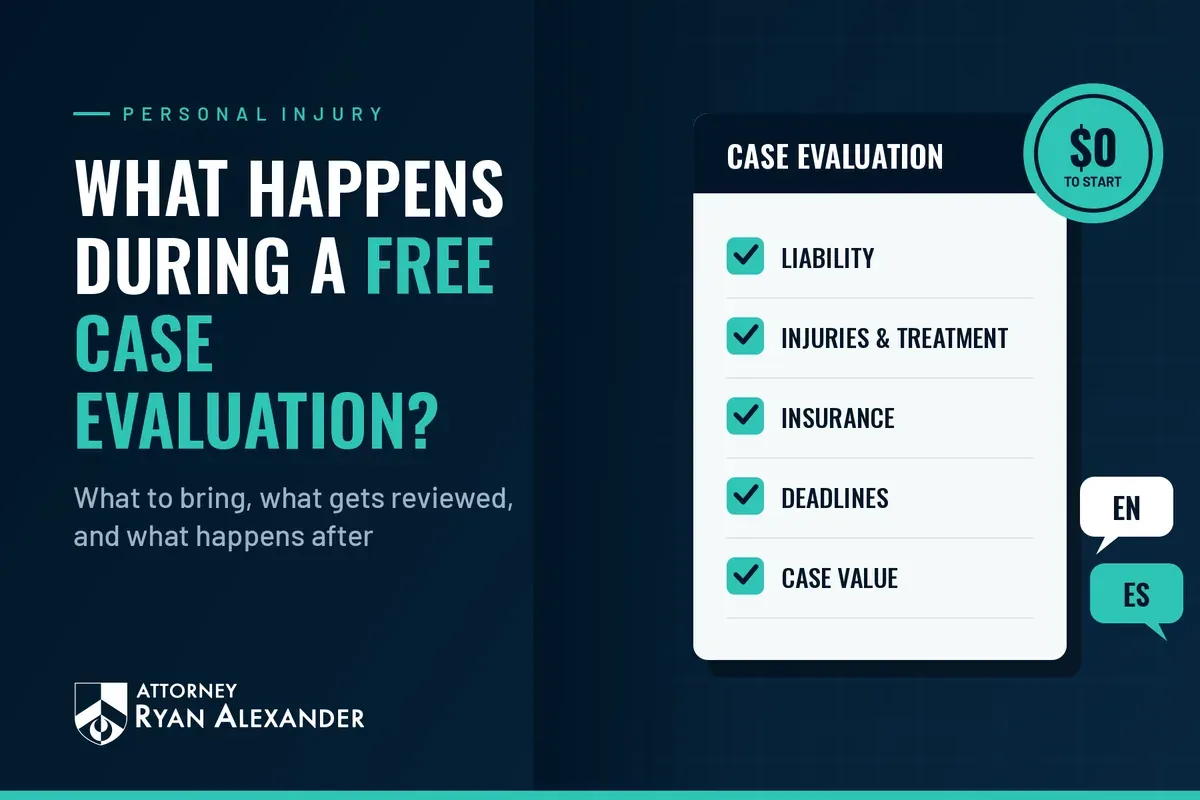
While you talk, the attorney is quietly running a checklist:
- Liability. Who is at fault, and can it be proved?
- Injuries and treatment. How serious, how well documented, and what is still ahead?
- Insurance. What coverage exists, the other driver's, yours, and any others, and is it enough?
- Deadlines. Where does the case sit against Nevada's two-year filing deadline and any shorter notice rules?
- Value drivers. What would make this claim strong, and what are its weak points?
Related: How Much Is My Car Accident Case Worth in Nevada?
A straight attorney will also tell you if you do not need a lawyer, or do not have a viable claim. That answer is part of what the evaluation is for.
The Questions You Should Ask
- Who will actually handle my case day to day?
- How do your fees work, and can you walk me through the agreement?
- What do you see as the strengths and problems in my case?
- What happens next, and how will I hear about progress?
Related: How to Choose a Personal Injury Lawyer in Las Vegas: 5 Questions to Ask Before You Hire
After the Evaluation: What Happens Next
If you decide to hire the firm, you sign the fee agreement, and the firm opens your claim: notifying insurers, gathering records, and taking over communication with adjusters, so the calls stop coming to you. If you decide not to, or the firm declines the case, you leave with a clearer picture of your deadlines and options, and nothing owed.
Evaluations at Ryan Alexander's office are available in English and Spanish, and the deadline clock does not wait, so the one version of this meeting that helps no one is the one that never happens.
Free Case Evaluation (702) 333-8888
This article provides general information and does not constitute legal advice. Every accident is different, and different claims may involve different deadlines, insurance policies, and legal issues.