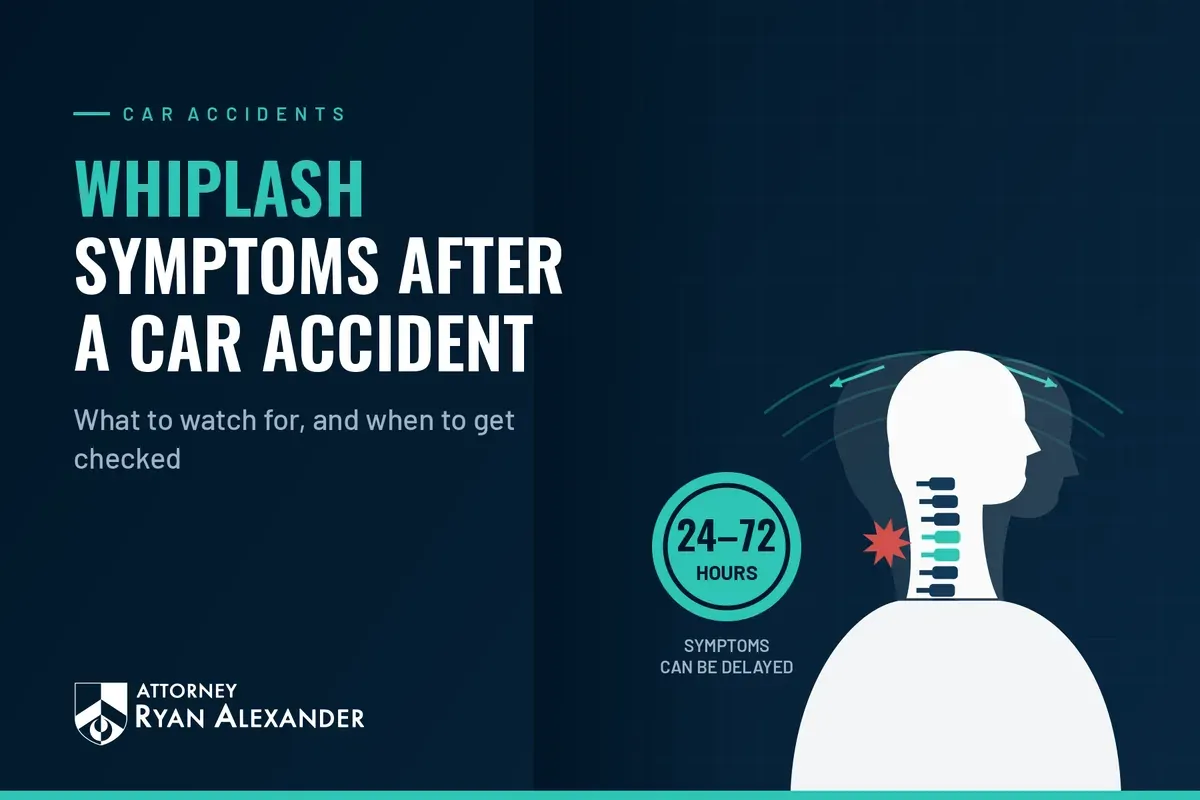
Whiplash Symptoms After a Car Accident: What to Watch For and When to Get Checked
Many people walk away from a crash feeling shaken but fine, then wake up the next morning barely able to turn their head.
That delayed pattern is classic whiplash. It is one of the most common car accident injuries in Las Vegas, one of the most frequently underestimated, and one of the injuries insurance companies most often try to minimize. Here is what it is, what to watch for, and when symptoms stop being "wait and see" and become "get checked now."
What Is Whiplash?
Whiplash is a neck injury caused by a rapid back-and-forth movement of the head, the way the end of a whip moves. In a rear-end collision, your torso is pushed forward while your head momentarily stays behind, then snaps forward. That motion can strain or tear muscles, tendons, and ligaments in the neck and upper back, and can irritate joints and discs.
Whiplash is most associated with rear-end crashes, but it can happen in side-impact and front-impact collisions too, and it does not require a high-speed crash. Significant whiplash injuries occur at speeds low enough that the vehicles show modest damage, which is one reason insurers arguing "the cars were barely damaged" are not making a medical argument.
Common Whiplash Symptoms
Symptoms vary, but the ones reported most often include:
- neck pain and stiffness
- reduced range of motion in the neck
- headaches, often starting at the base of the skull
- pain in the shoulders, upper back, or between the shoulder blades
- tingling, numbness, or weakness in the arms or hands
- dizziness or balance problems
- fatigue
- jaw pain
- ringing in the ears
- blurred vision
- trouble sleeping
- difficulty concentrating or memory problems
- irritability or mood changes
Why Symptoms Are Often Delayed
It is very common for whiplash symptoms to appear 24 to 72 hours after a crash, and sometimes later.
Adrenaline and the stress response can mask pain at the scene. Inflammation and muscle spasm build over the following hours and days. This is exactly why saying "I'm fine" to an officer or an insurance adjuster at the scene can come back to haunt a claim: hours later, you may genuinely not be fine.
Related: What the Insurance Adjuster Is Trying to Get You to Say After a Las Vegas Car Accident
If you told people you were unhurt and symptoms developed afterward, you are not locked into that first impression. You are describing a textbook pattern of this injury. Get examined, and describe honestly when the symptoms began.
Warning Signs That Need Prompt Medical Attention
Most whiplash is treated conservatively and improves over weeks. Some symptoms after a crash point to something more serious, including fractures, disc injuries, or head injuries, and should be evaluated the same day:
- severe or worsening headache
- weakness, numbness, or clumsiness in the arms, hands, or legs
- loss of bladder or bowel control
- severe neck pain after a high-speed crash or rollover
- confusion, slurred speech, or unusual drowsiness
- vision changes
- vomiting
- fainting
When in doubt, get checked. This article is general information, not medical advice, and it is no substitute for an examination.
How Whiplash Is Diagnosed and Treated
A provider will usually begin with your history of the crash and a physical examination of your neck, shoulders, and arms, checking range of motion, tenderness, reflexes, and strength. Imaging such as X-ray, CT, or MRI is ordered when the examination or symptoms suggest something beyond a soft-tissue injury.
Treatment commonly focuses on:
- short-term pain and inflammation control
- keeping the neck moving within tolerance rather than full immobilization
- physical therapy and guided exercises
- heat or ice
- follow-up evaluation if symptoms persist or change
Recovery timelines vary widely. Many people improve within a few weeks. Others develop symptoms that last months, particularly when headaches, arm symptoms, or sleep problems are involved. Following the treatment plan, and showing up to appointments, matters for your health first of all. It also creates the record that proves the injury was real.
Why Documentation Matters for a Whiplash Claim
Insurance companies routinely challenge whiplash claims. The arguments are predictable:
- "There was a gap before they saw a doctor, so it must not have hurt."
- "The vehicles had minor damage, so the people could not be injured."
- "They said they were fine at the scene."
- "These symptoms are from a pre-existing condition."
Each of those arguments gets weaker when there is a clean record: prompt examination after symptoms began, consistent descriptions to providers, imaging or therapy notes, and documentation of missed work or limited activities. The medical record becomes the backbone of the claim.
Related: What to Do After a Car Accident in Las Vegas: 10 Steps That Can Protect Your Claim
Hurt Your Neck in a Las Vegas Crash?
If neck pain, headaches, or arm symptoms showed up after a collision, even a day or two later, get examined and then get your questions answered. Attorney Ryan Alexander and his team can explain how whiplash claims are evaluated, what evidence insurers look for, and what your next steps should be.
Free Case Evaluation (702) 333-8888
This article provides general information and does not constitute legal or medical advice. Every accident is different, and different claims may involve different deadlines, insurance policies, and legal issues. If you are experiencing symptoms, seek evaluation from a qualified medical provider.