What Percentage Do Personal Injury Attorneys Take in Nevada?
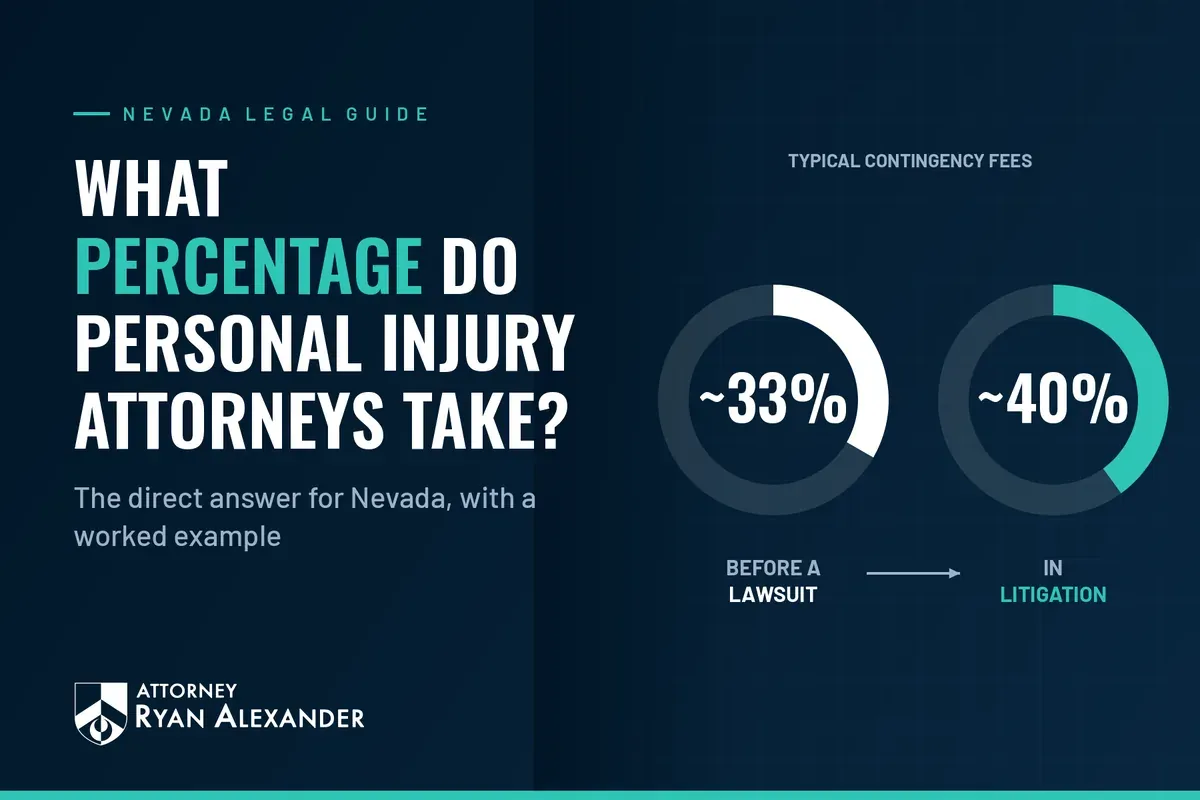
The short answer: in Nevada, a personal injury attorney working on contingency typically takes about one third of the recovery if the case settles before a lawsuit is filed, and often 40% if the case goes into litigation or trial. There is no fee at all if there is no recovery.
The percentage in your case is set by the written agreement you sign, so the real questions are what the stages are, what else gets deducted, and what to compare before you hire. Here is the full picture.
The Typical Percentages, by Stage
- Settled before a lawsuit is filed: around 33%, one third of the gross recovery, is the common structure.
- After a lawsuit is filed: commonly 40%, reflecting the additional work of discovery, depositions, experts, and court deadlines.
- Through trial or appeal: some agreements step up again at this stage.
These are industry-typical ranges, not a statewide fixed rate. Firms differ, case types differ, and Nevada law requires the agreement to be in writing and signed, with the calculation method stated, so you should never have to guess.
A Worked Example
Say your case settles for $60,000 before a lawsuit, at a one-third fee:
- Attorney's fee (33%): about $20,000
- Case costs (records, filing, experts, if any): varies, often a few hundred to a few thousand dollars
- Medical liens and bills still owed: resolved from the settlement, and often negotiable
- The rest is yours, itemized on a settlement statement before you sign
The same case settled after filing suit, at 40%, would carry a $24,000 fee on the same $60,000, which is exactly why good firms weigh the likely gain from filing against the higher stage before recommending it.
Related: How Personal Injury Settlements Work in Nevada, Step by Step
Fee Versus Costs: Not the Same Line
The percentage is the fee, payment for the legal work. Costs are the out-of-pocket expenses of building the case, and they come out of the settlement separately. When comparing firms, ask how costs are handled if the case is lost. Under most contingency agreements you owe no attorney's fee on a loss, but cost responsibility varies by contract, and it should be clear before you sign.
What Can Move the Percentage
- the stage the case resolves at, the biggest single factor
- case complexity, such as disputed fault or multiple defendants
- whether the agreement was negotiated for a very large or very small case
- in some case types, court approval requirements, for example claims involving minors
The Questions to Ask Before You Sign
- What is the percentage at each stage, and what event triggers the increase?
- Is the fee calculated on the gross recovery or after costs?
- What costs am I responsible for, win or lose?
- Can I see a sample settlement statement?
For the deeper explanation of how contingency fees work and why the structure exists, see the full guide:
Related: How Do Personal Injury Lawyers Get Paid? Contingency Fees Explained
Want the Numbers for Your Case?
Attorney Ryan Alexander's team will walk through the fee agreement line by line before you sign anything, and the evaluation itself is free.
Free Case Evaluation (702) 333-8888
This article provides general information and does not constitute legal advice. Every accident is different, and different claims may involve different deadlines, insurance policies, and legal issues.